
Filters

Grid Tied Solar with Battery Backup

2 products

Showing 1 - 2 of 2 products

Showing 1 - 2 of 2 products
View
3000W Flexpower Grid Tied Emergency Solar Electric System 48VDC/120VAC
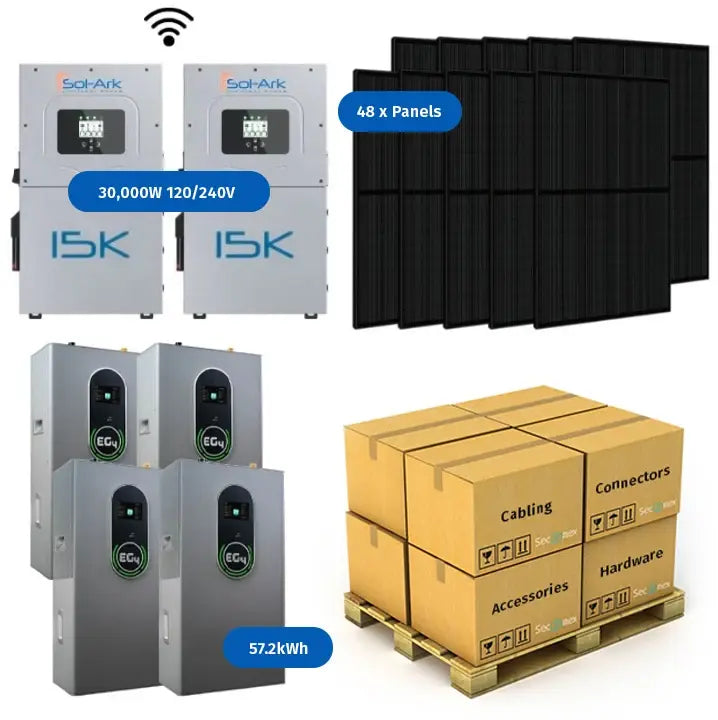
Our grid-tied solar power systems with battery backup offer the ideal balance of energy independence and grid connectivity. These complete solar kits are designed to power your home or business, providing reliable backup power when the utility grid goes down.

Each grid-tie solar system is engineered for resilience, combining high-efficiency PV panels with robust battery storage. This setup allows you to store excess solar energy generated during the day, ensuring your critical appliances remain operational during a blackout.

The core of this solar system is a powerful inverter that manages energy flow between the solar panels, battery bank, and the grid. For a fully independent setup, consider our selection of Off-grid systems, which operate without a grid connection.

These hybrid systems allow you to take advantage of net metering, where available, by selling excess power back to the utility.

Our range of Solar inverters includes advanced models that make managing your solar production and energy storage seamless.

Related Collections


FAQ

The primary advantage is energy security. You get the financial benefits of a grid-tied system, such as net metering, while also having a reliable backup power source from your battery bank during a power outage.

During the day, your solar panels power your home and charge your battery. If the panels produce more power than you need, the excess can be stored in the battery. When the grid goes down, the system automatically switches to battery power.

While these systems are designed for grid-tied functionality with battery backup, many components, such as inverters and batteries, are suitable for a complete off-grid system. However, an off-grid setup requires careful system design to ensure you can generate and store sufficient power to meet all your needs.

With a grid-tied system, any excess solar energy your panels produce beyond your use is stored and exported to the utility grid. Depending on your local utility's net metering policy, you may receive credits on your electricity bill for this power.

The ideal battery bank size depends on your energy needs and what appliances you want to power during an outage. A solar installer can perform an energy audit to determine the right kWh capacity for your home.

Due to the complexity of wiring a system that interacts with the public utility grid and includes a high-voltage battery bank, professional installation is strongly recommended. A qualified installer will ensure the system is safe, efficient, and compliant with all local codes.

Recently viewed